Choosing a washing machine: capacity, spin speed, energy label and size
You choose a washing machine by how much laundry you have, how dry it should come out and where it will stand. Here is how to read the energy label and measure the space.

Popular picks from this guide
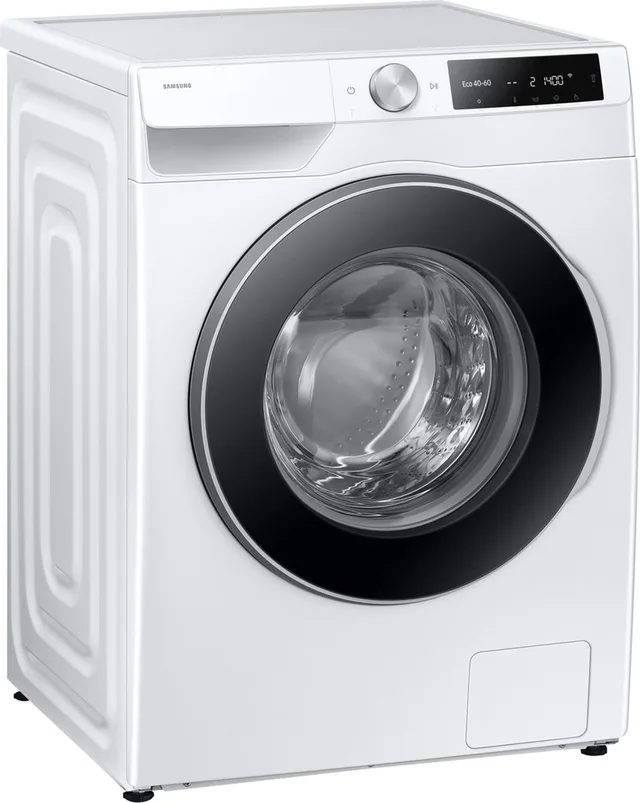
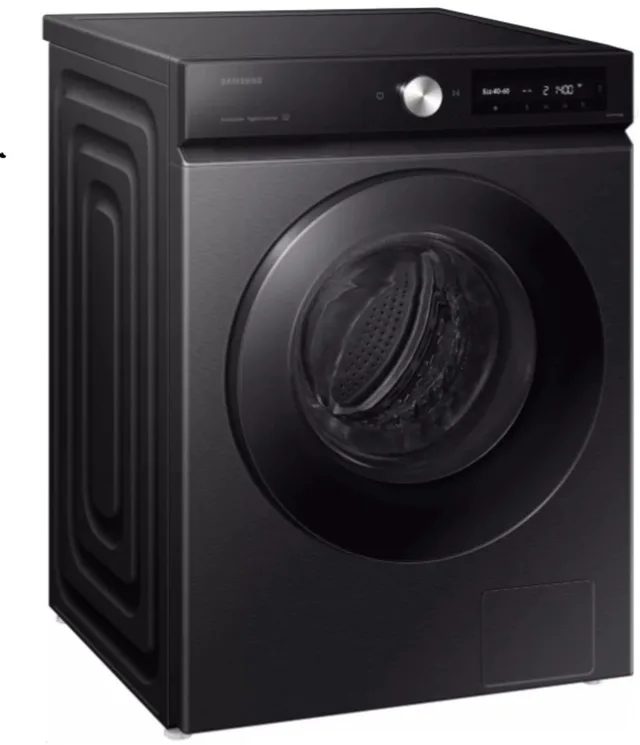
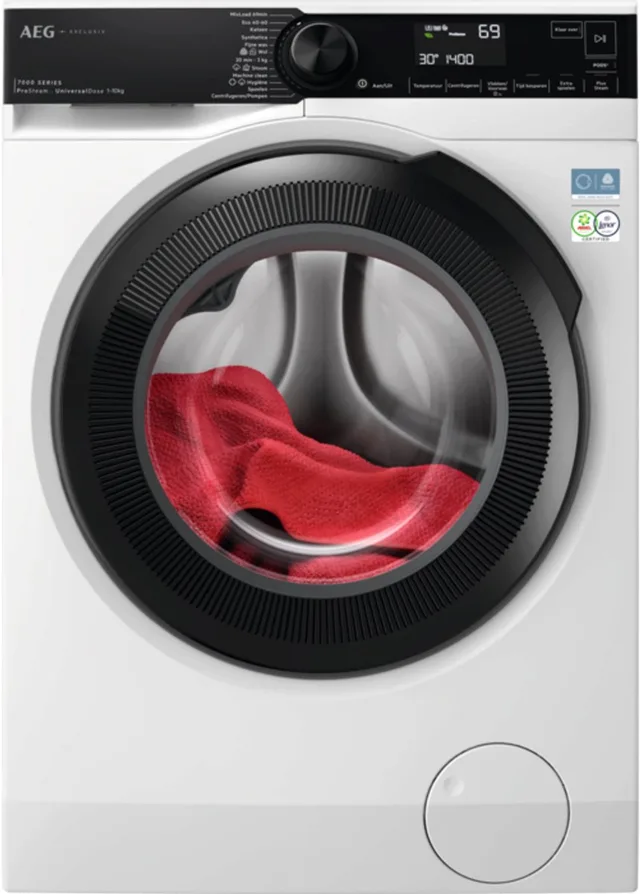
Popular products at today's lowest price. Compare every shop on the product page.
Short answer: Choose the capacity by how much laundry you have per load, because a full drum uses less than a half-empty one. Then look at the spin speed and spin class, compare the kWh on the energy label and measure the space: height, width, depth and room for the door. Extras such as automatic dosing are handy but not necessary.
What follows comes from the European energy label, Milieu Centraal (the Dutch environment advice centre) and the manufacturers. Leafwatt tests no appliances itself.
Capacity: how many kilos
The capacity in the product name, for example 8, 9 or 10 kg, is according to the energy label the maximum amount of dry laundry you can wash in the eco 40-60 programme. Other programmes, such as wool, delicates or synthetics, take less; the manual says how much.
Milieu Centraal advises loading the drum fully: that saves electricity and water per kilo of laundry. A bigger drum only helps if you fill it. If you often wash large items such as duvets, a 9 or 10 kg drum gives more room. There are machines of 8 kg, such as the AEG LF628400, of 9 kg, such as the Siemens WG44G2FLNL, and of 10 kg, such as the Samsung WW1UFG5U34AEEN.
Spin speed and spin class
The spin speed says how fast the drum turns at the end. The higher it is, the less water stays in the laundry. You notice that most when you tumble dry afterwards: wetter laundry takes longer to dry. The energy label shows the spin-drying class, from A to G: A stands for little remaining moisture, G for a lot.
Product names mostly show 1400 and 1600 rpm, such as the AEG LF628600 and the AEG LR85964 at 1600 rpm. For delicates you choose a lower speed in the programme yourself.
Washing machines from 8 to 10 kg
- AEG
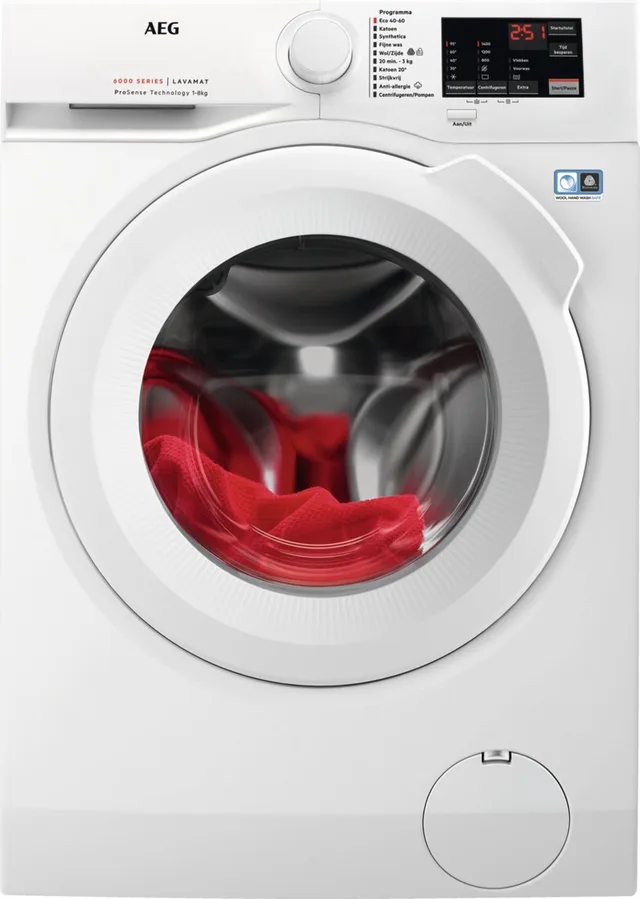
LF628400 6000 serie ProSense®
Wasmachine · Energielabel A8 kg1,400 rpm59.6 cmFrom €450 · at 3 shops
Lowest in 24 days
- AEG
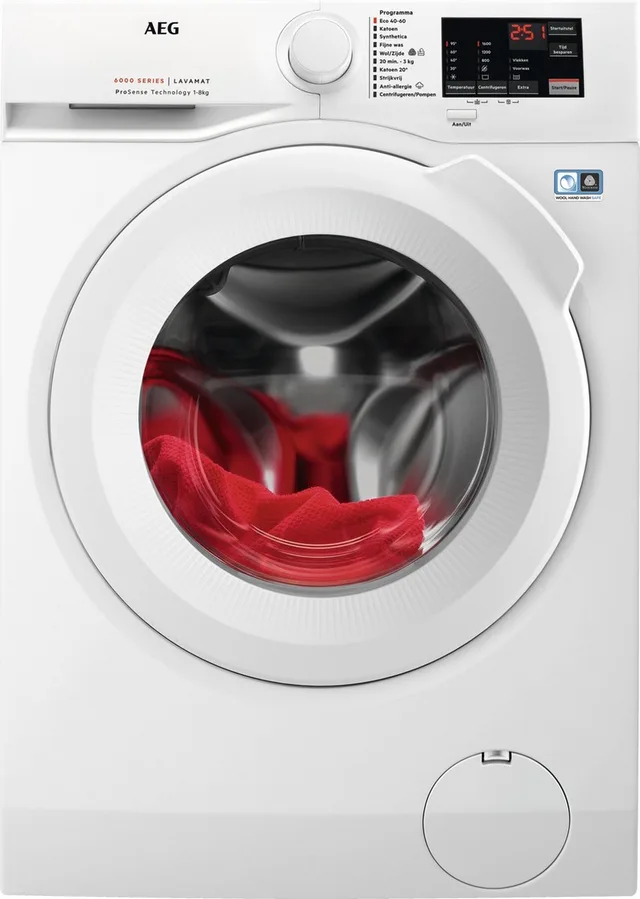
LF628600 6000 serie ProSense®
Wasmachine · Energielabel A8 kg1,600 rpm59.6 cmFrom €469 · at 4 shops
Lowest in 24 days
- Siemens
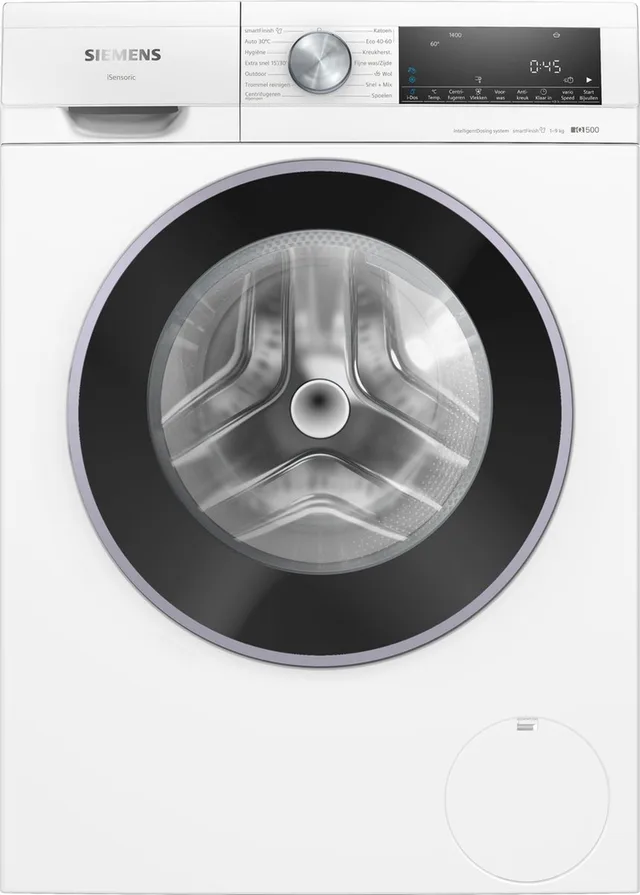
WG44G2FLNL, iQ500, washing machine, 9 kg, 1400 rpm, energy label A, automatic dosing, smartFinish
9 kg1,400 rpmFrom €779 · at 5 shops
Lowest in 24 days
- AEG
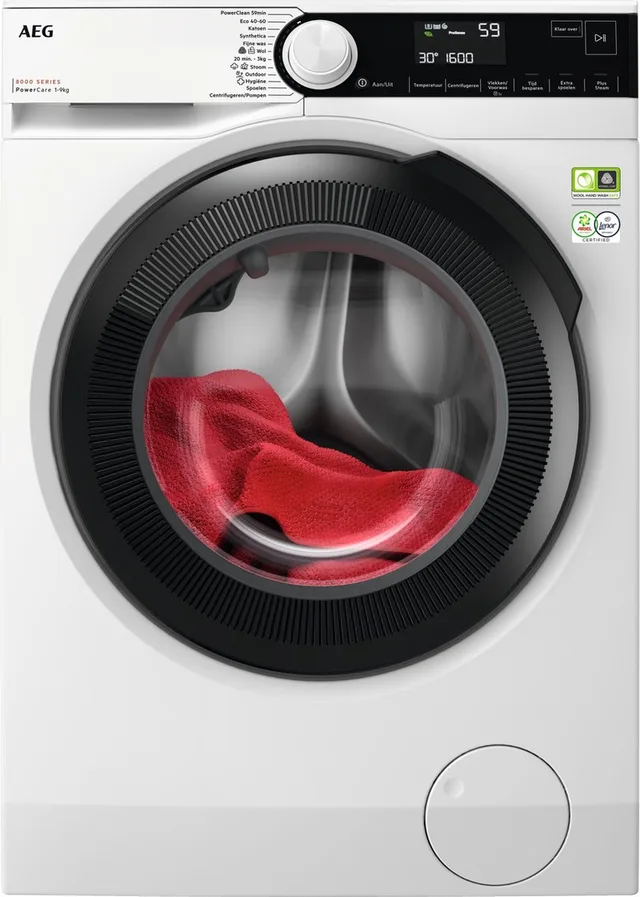
LR85964 8000 serie PowerCare®
Wasmachine · Energielabel A9 kg1,600 rpmFrom €710 · at 2 shops
Lowest in 16 days
- AEG
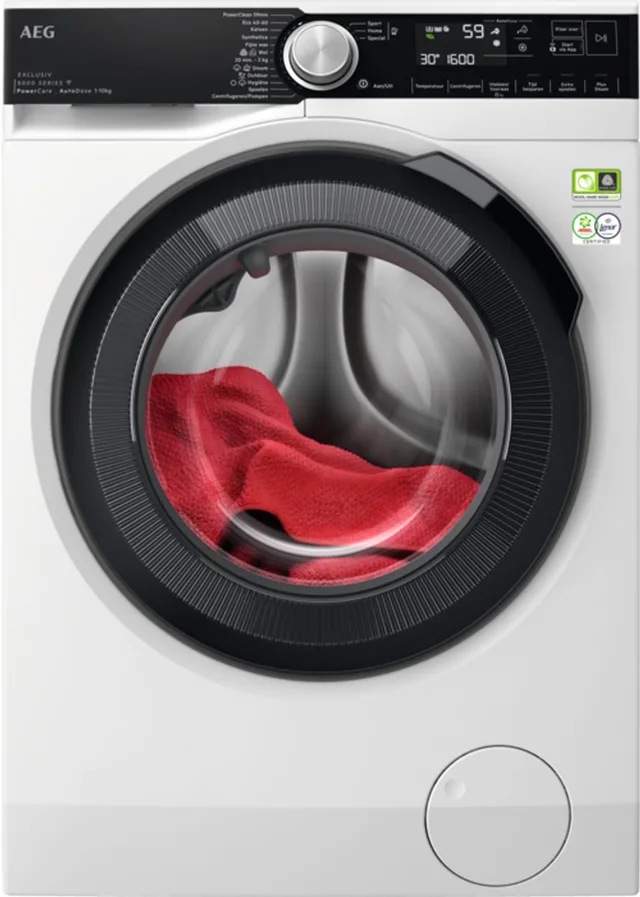
LR8KOBLENZ 8000 serie PowerCare
Wasmachine10 kg1,600 rpm59.7 cmFrom €899 · at 3 shops
Lowest in 24 days
- Samsung
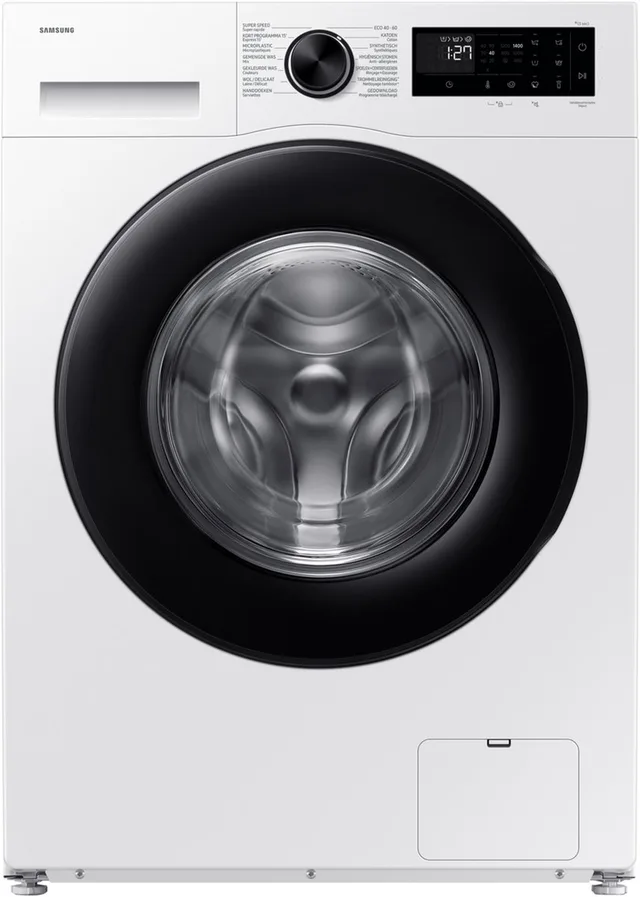
WW1UFG5U34AEEN 5000-serie
Wasmachine · AI Ecobubble™10 kg1,400 rpm60 cmFrom €542 · at 4 shops
Lowest in 24 days
- Hisense
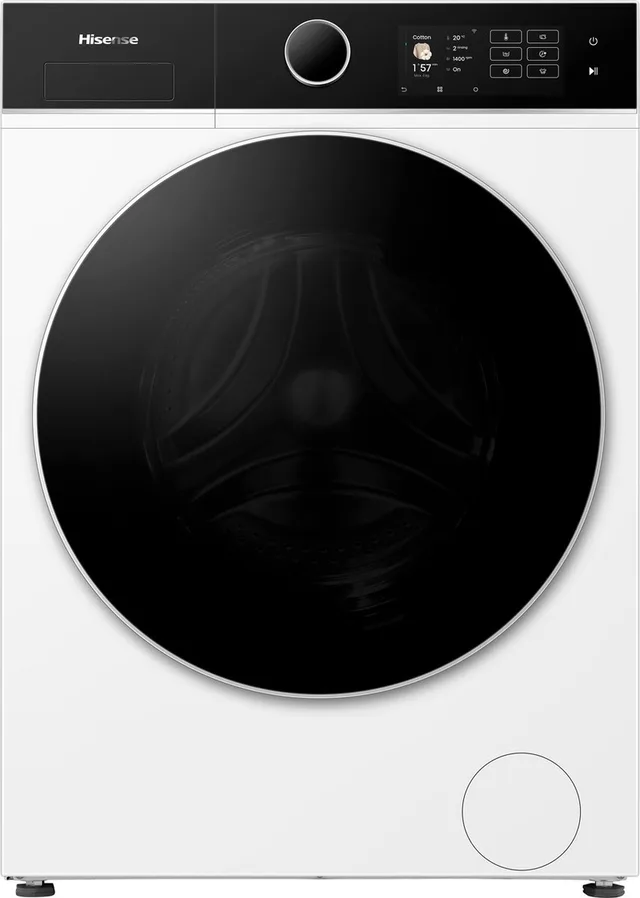
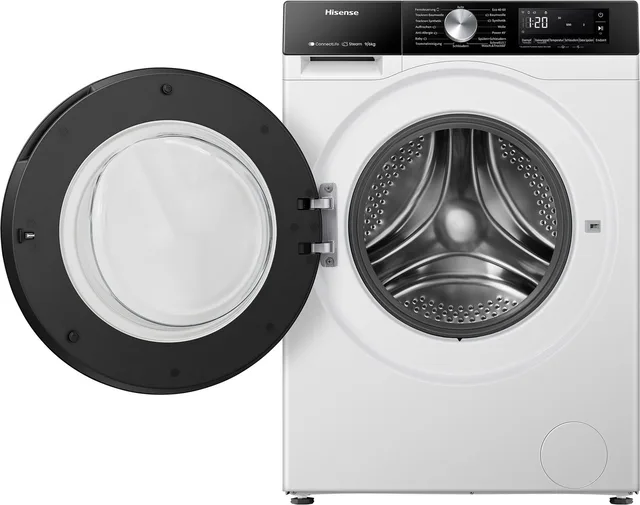
WF5I8043BWF washing machine, 8 kg, 1400 rpm, energy class A(-30%), Slimline 47 cm, iPlay display, Power & Quicker Wash, WiFi, Connectlife app, steam function, drum light
8 kg1,400 rpm59.5 cmFrom €499 · at 3 shops
Reading the energy label
Since 1 March 2021 washing machines have an energy label with classes from A to G. The label gives:
- the electricity use in kWh per 100 cycles in the eco 40-60 programme;
- the capacity in kg;
- the water use per cycle in litres;
- how long the eco 40-60 programme takes;
- the spin-drying class;
- the noise during spinning, in dB(A) and a class from A to D.
The QR code on the label takes you to EPREL, the European product database. Makers sometimes put in the name how much more efficient than class A a machine is, such as "A-30%" or "40% more efficient than required for A". That means its consumption is below the limit for class A. To be sure, compare the kWh on the label. With What does an appliance really cost, electricity included? you can work out what a washing machine costs in electricity per year.
How high, wide and deep
Most freestanding front loaders are about 85 cm high and 60 cm wide, so they fit the standard opening in a kitchen or utility room. For the AEG LF628400 the maker gives a width of 59.6 cm. Depth varies more: Hisense sells the WF5I8043BWF as a Slimline model, which is less deep. Allow extra room behind and in front of the machine for the door, the hoses and the plug. The exact dimensions are in the specifications of each version.
If the space is narrow, a top loader is an option: it is narrower than a front loader and opens from the top, such as the Whirlpool TDLR 6261BS. You cannot stack a dryer on a top loader.
Stacking or in a cupboard
A dryer goes on top of the washing machine with the manufacturer's stacking kit; the washing machine is always at the bottom. The manual says which kit fits which pair. If the machine goes into a cupboard or under the worktop, check the installation instructions: they give the space needed around it, whether the top panel may come off and how the door must be able to open. Set the machine level; the feet adjust for that.
In two minds between a dryer and a washer-dryer? Read Heat pump dryer or condenser dryer.
Handy extras
- Automatic dosing: the machine doses detergent from a tank by itself. Miele calls it TwinDos, as on the Miele WQ 1200 and the Miele WER 875; AEG calls it AutoDose, as on the AEG LR7696AAD4.
- Steam: a steam programme against creases, at Miele SteamCare, as on the Miele WQ 1200.
- Noise: the specifications give the noise during spinning, for example 74 dB for the AEG LF628400 and 72 dB for the Hisense WF5I8043BWF.
- Wifi and an app: handy to see when the wash is done, not needed to wash.
Washing machines with automatic dosing or steam
- Miele
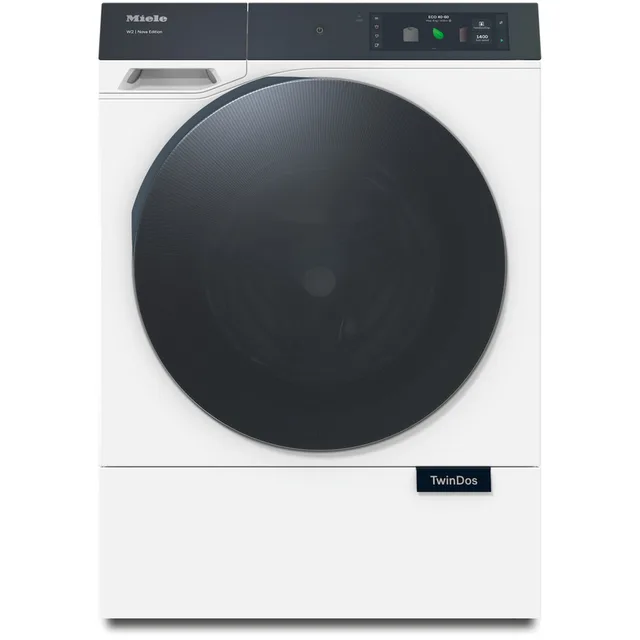
WQ 1200 WPS Nova Excellence PowerWash & TwinDos & SteamCare washing machine white
From €2,699 · at 3 shops
- Miele
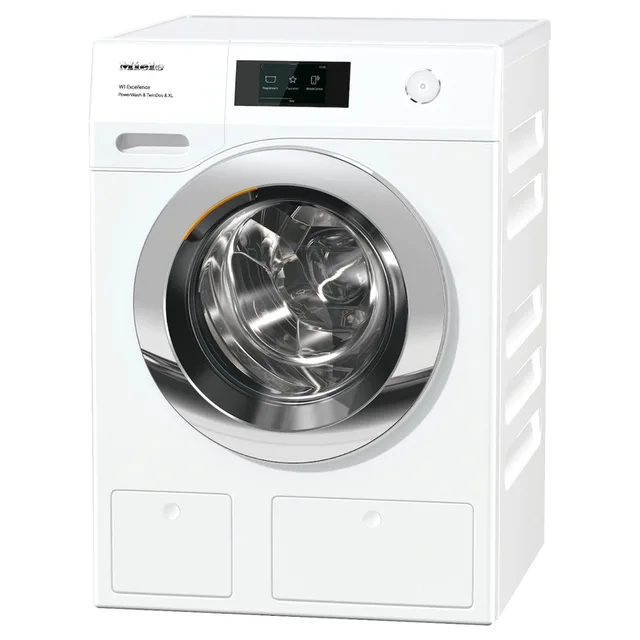
WER 875 WPS PowerWash TwinDos Wasmachine Wit
From €2,099 · at 2 shops
- AEG
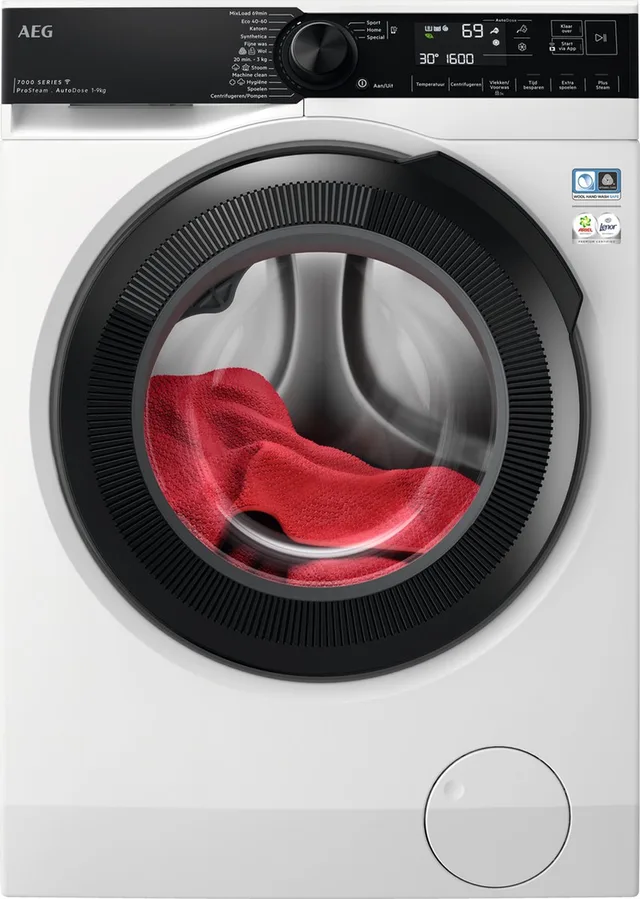
LR7696AAD4 EcoLine 7000 serie ProSteam® AutoDose
Wasmachine9 kg1,600 rpm59.7 cmFrom €720 · at 3 shops
Lowest in 24 days
- AEG
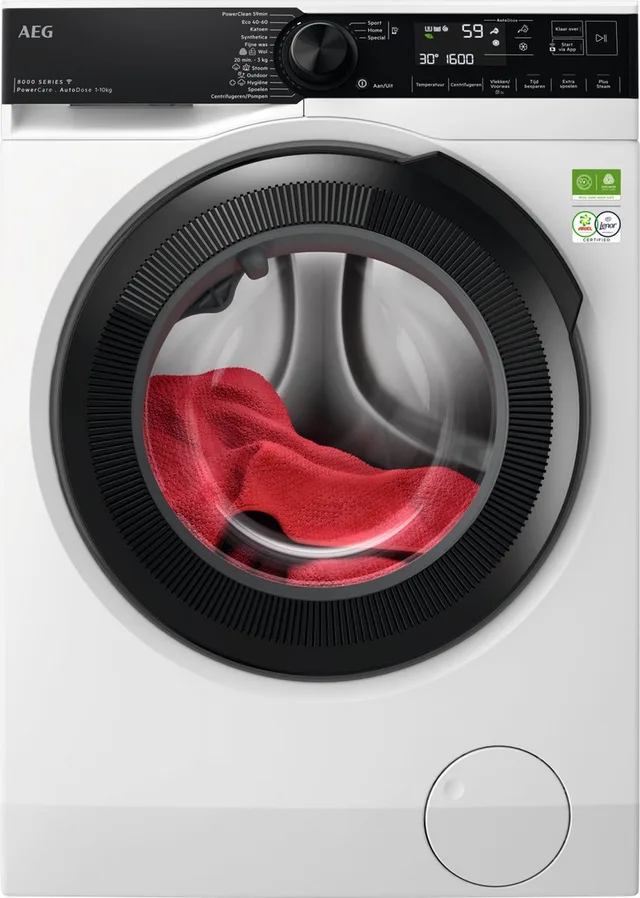
LR8606AD4 8000 PowerCare AutoDose
Wasmachine10 kg1,600 rpmFrom €879 · at 2 shops
Lowest in 24 days
All models are under washing machines.
Frequently asked questions
How high is a washing machine?
A freestanding front loader is usually about 85 cm high. The exact height, width and depth are in the specifications of each version.
How many rpm does a washing machine need?
That depends on whether you tumble dry afterwards. The higher the spin speed, the less moisture is left; on the energy label you see it in the spin-drying class.
What does A-30% mean on a washing machine?
The maker says the machine uses 30% less than the limit for class A. The label itself shows class A; compare the kWh per 100 cycles.
Which capacity do I need?
Choose the weight you fill per load. A full drum is more efficient; a bigger drum mainly helps if you often wash large items.
Keep looking
Leafwatt doesn’t test devices itself. This guide sets out what manufacturers state.
Products from this guide
Popular products with a current price at the shops. Compare the prices on the product page.
- AEG
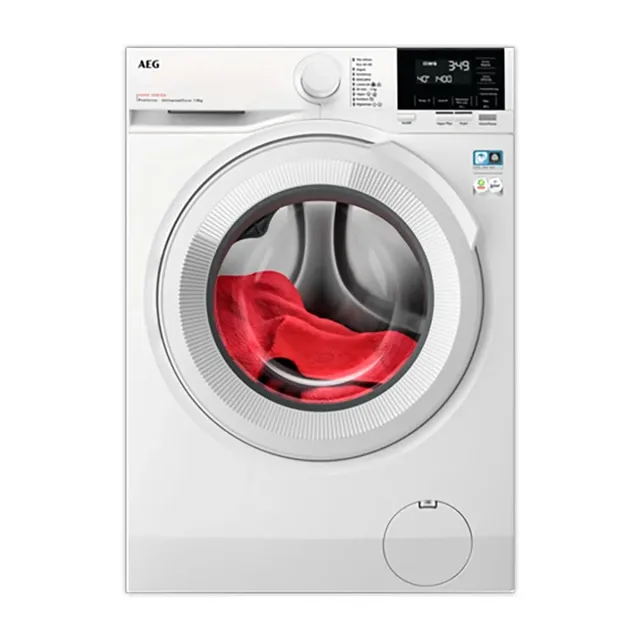
Lfr7184n2v Voorlader Wasmachine
8 kg1,400 rpm59.6 cm€678.48 · at 1 shop
- Hisense
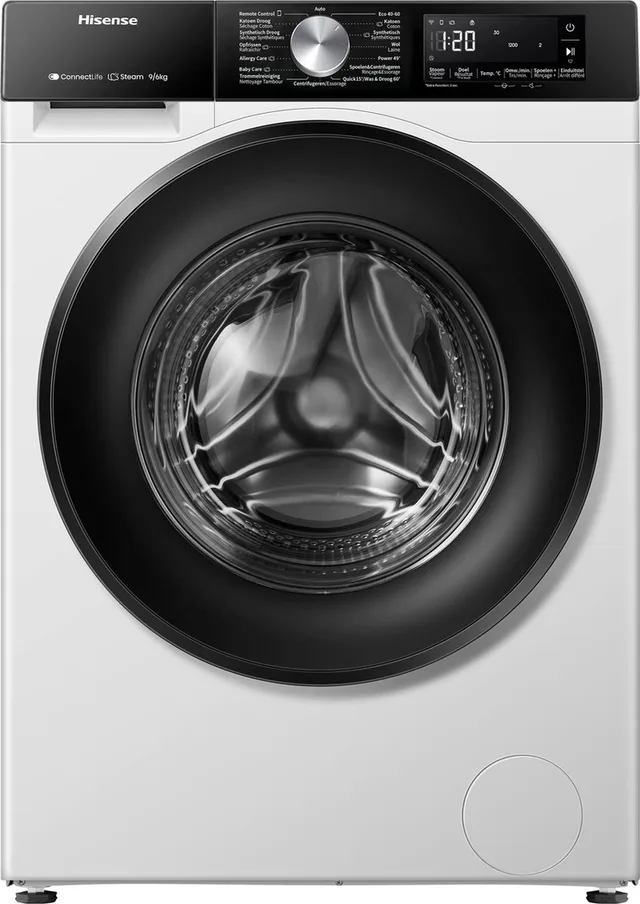
WD3S9043BW3 Was-droogcombinatie Wit
9 kg1,400 rpm59.5 cmFrom €499 · at 5 shops
- Hisense
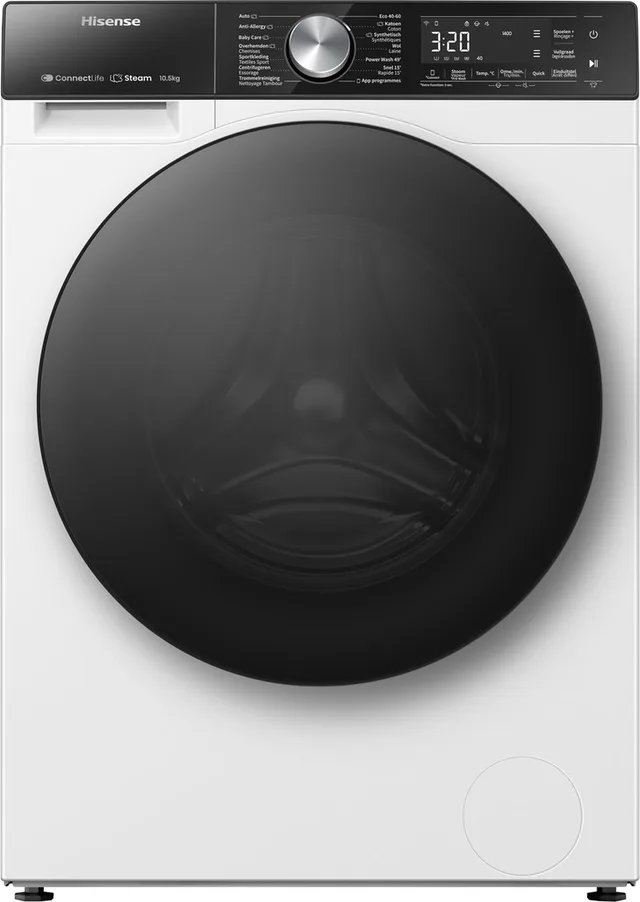
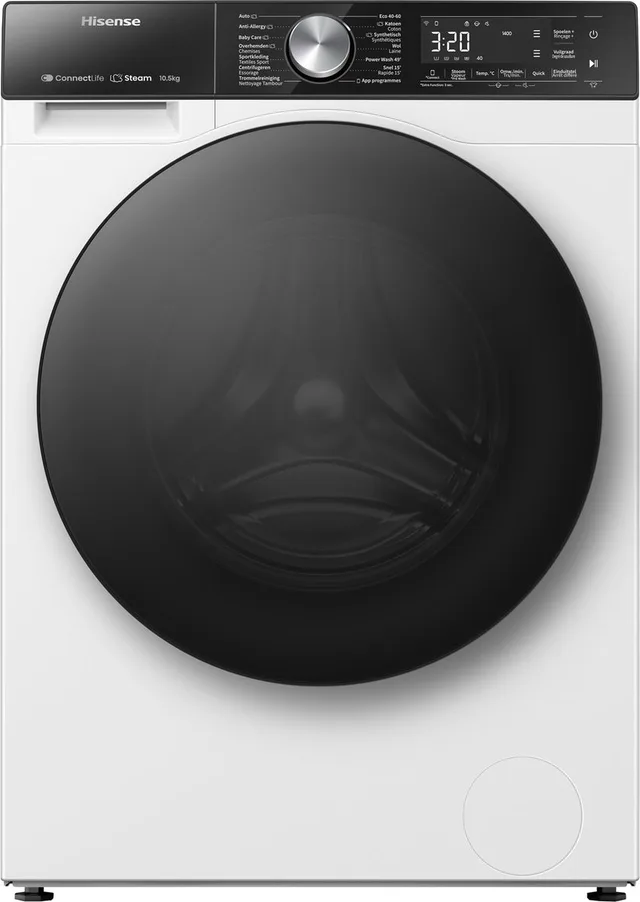
Washing machine WF5S1043BW, 10.5kg, A class, steam function, ConnectLife, 72dB
(A), audio signal, cold wash 15 °C10.5 kg1,400 rpm59.5 cmFrom €522 · at 2 shops
- Hisense
WF5I8043BWF washing machine, 8 kg, 1400 rpm, energy class A(-30%), Slimline 47 cm, iPlay display, Power & Quicker Wash, WiFi, Connectlife app, steam function, drum light
8 kg1,400 rpm59.5 cmFrom €499 · at 3 shops
- Samsung
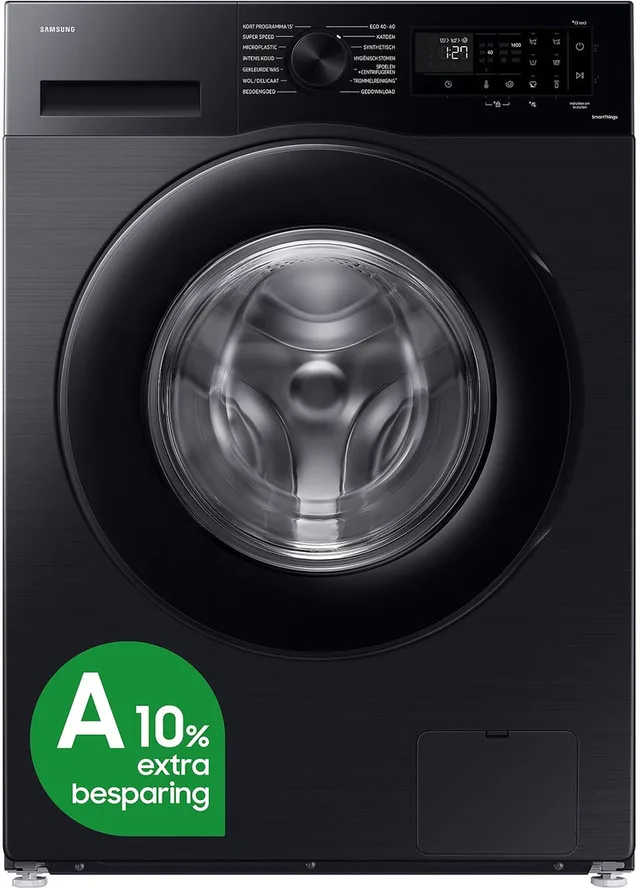
WW1UDG5B25ABEN Wasmachine
11 kg1,400 rpm60 cmFrom €589 · at 5 shops
More buying guides
- Heat pump dryer or condenser dryer: what is the difference? A heat pump dryer is a condenser dryer too, but it heats the air another way. Here is how they differ in electricity, drying time and placement, and how to read the energy label. Read the guide
- Choosing an induction hob: one or two phases, zones, flex and extractor With an induction hob it starts in the fuse box: one or two phases decides the power. Then you choose the width, the zones and whether the extractor goes into the hob. Read the guide